
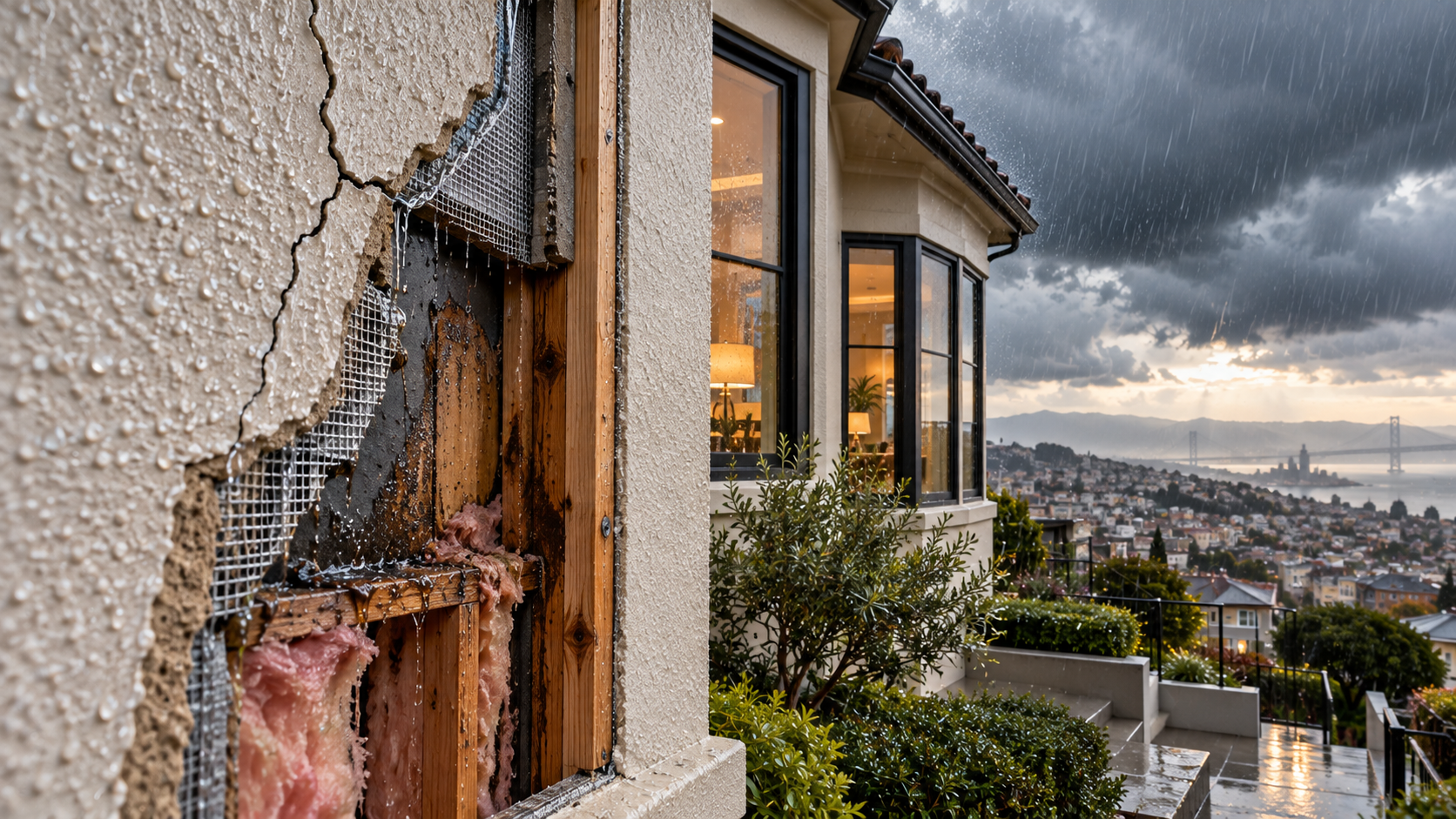
Transforming Your Home Into a Fortress: How Small Stucco Cracks Lead to $1M Disasters in the Age of El Niño
If you own a stucco home, you’ve probably noticed a hairline crack or two near a window frame or along an exterior wall. It’s easy to shrug them off as "cosmetic wear and tear."
But according to recent housing and climate data from Stanford University's Open Virtual Assistant Lab and Climate Central, ignoring those tiny cracks is an expensive game of roulette—especially when El Niño is factored in.
What looks like a simple hairline fracture is often an active highway for water. In high-cost real estate markets like Los Angeles or coastal California, delaying routine stucco maintenance can escalate into a structural disaster exceeding $1,000,000.
Here is a breakdown of the hidden economics of deferred home maintenance, how shifting climate patterns accelerate the damage, and how you can protect your property value.
The Hidden Anatomy of a Stucco Failure
Stucco is a remarkably durable building material with high compressive strength. However, it has very low tensile strength. This means it naturally cracks under routine temperature swings, seasonal shifting, and seismic activity.
When a crack punctures the outer plaster layer, it triggers a hidden, destructive domino effect behind your drywall:
[Stucco Surface Crack]
│
▼
[Water Entry via Bulk Infiltration]
│
▼
[Concealed Moisture Retention Behind Finished Walls]
│
▼
[OSB / Wood Framing Rot + Mold Growth]
│
▼
[Insulation Thermal Degradation (Elevated Energy Costs)]
│
▼
[Forced Structural Demolition & Total Remediation Construction]
Because this deterioration occurs entirely hidden behind finished interior surfaces, the damage accumulates invisiblyuntil catastrophic rot forces massive remedial work.
The El Niño Factor: Climate Nonstationarity
Why are these cracks suddenly a multi-thousand-dollar ticking time bomb? The answer lies in climate nonstationarity—the reality that historical weather baselines can no longer predict future extremes.
During El Niño cycles, regions face prolonged, high-intensity moisture regimes. This climate shift changes the financial math for homeowners across distinct regions:
Northern California
Atmospheric river (AR) events are slamming coastal valleys and mountain foothills. Localized data shows county-level hourly precipitation intensities skyrocketing between 3.6% and 78.4% above historical national standards. This intense hydraulic pressure forces water deep into unsealed stucco cracks.
Gulf Coast & the Southeast
Coastal zones are regularly enduring staggering hourly rainfall maximums up to 167 mm/hr. When severe storm surges strike, unmaintained stucco expansion joints compress and fail, triggering immediate interior mold epidemics.
Inland & Mountainous Areas
In hillside communities—particularly those near recent wildfire burn scars—heavy rains trigger debris flows and landslides. Mud and moisture pool against home foundations. To make matters worse, rapid post-storm plant growth frequently covers up this exterior erosion, delaying critical repairs until the foundation has already settled.
The "4–8x" Deferred Maintenance Multiplier
In property management and building science, economists rely on the "4–8x" cost multiplier. This metric proves that delaying a minor, low-cost repair results in exponentially higher total costs when remediation is finally forced upon you.
Industry standards recommend setting aside 1% to 4% of your home's total value every single year for routine upkeep.
If you bypass that maintenance budget, a patch job that would have cost a few hundred dollars transforms into a multi-phase structural engineering nightmare:
$$\text{Forensic Investigation} \longrightarrow \text{Remediation Design} \longrightarrow \text{Mold Abatement} \longrightarrow \text{Demolition} \longrightarrow \text{Structural Reconstruction}$$
Insurance & Policy Risks: The New Reality
The economic fallout of deferred maintenance stretches far beyond construction bills. Shifting climate hazards have radically destabilized the real estate and property insurance landscape.
Premium Volatility & Market Dropouts: Insurers are responding to rising disaster claims by tightening eligibility requirements or withdrawing entirely from high-risk zones (such as parts of California and Florida).
The Negligence Clause: If an insurance adjuster determines that interior water damage or mold growth was caused by long-term, unaddressed exterior cracks, claims can be entirely denied under owner-negligence clauses.
Properties with documented, unaddressed envelope issues are quickly becoming completely uninsurable and unfinancable.
Action Plan: How to Protect Your Asset
[Proactive Envelope Care] ➔ [Detailed Maintenance Logs] ➔ [Underwriting Transparency] ➔ [Stable Premiums]
Audit High-Stress Zones: Routinely inspect the upper corners of exterior doors and windows. These are primary entry pathways for bulk water infiltration.
Prioritize Performance Over Cosmetics: Budget for waterproofing integrity, weep-screed clearing, and flashing repairs before spending money on cosmetic interior renovations.
Keep a Digital Maintenance Log: Fully document every inspection and certified professional repair. Providing a transparent history to insurance underwriters is becoming a vital tool to secure lower rates and maintain market coverage.