
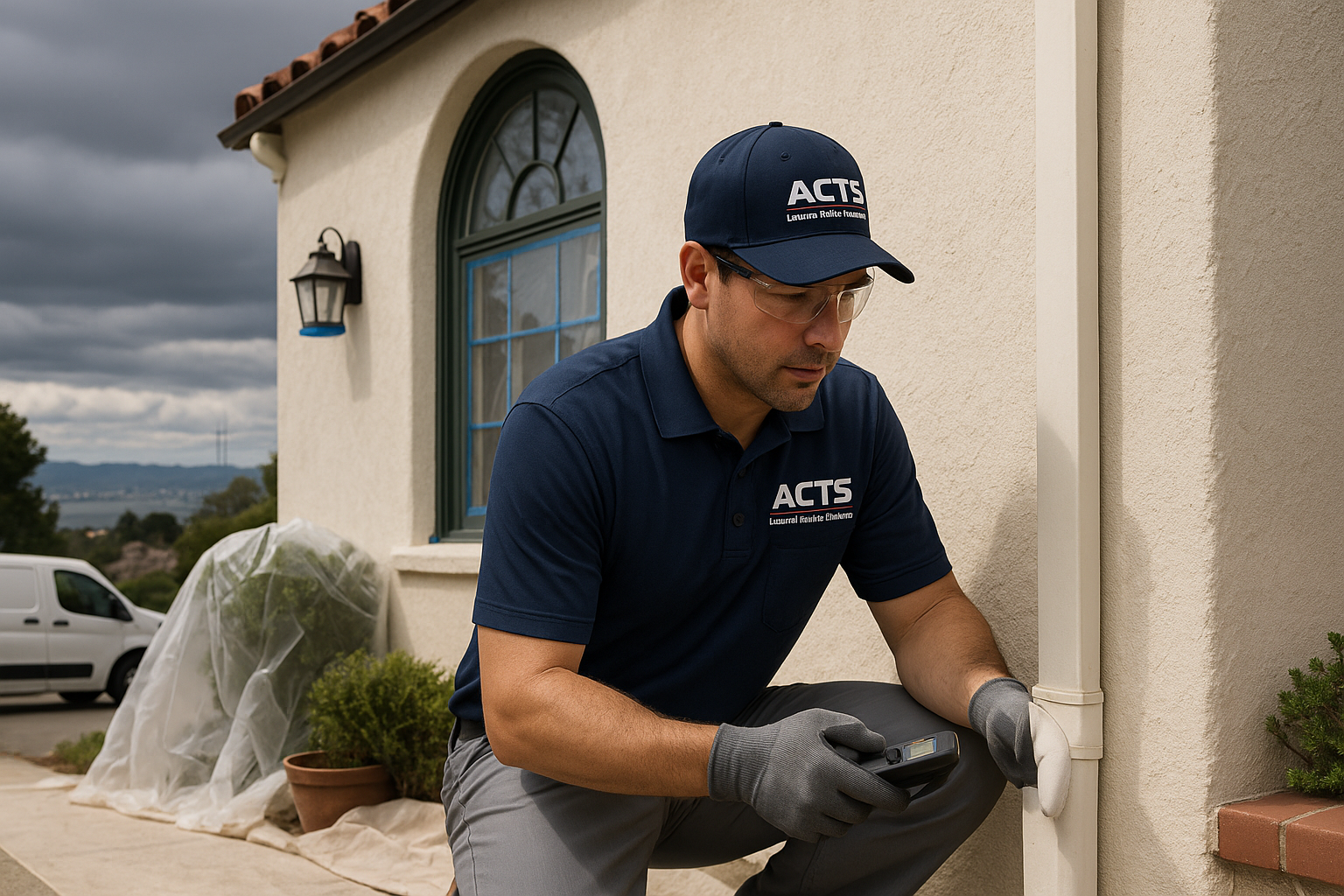
Should You Paint Your Bay Area Home Before El Niño? Smart Storm Preparation for San Francisco–Hillsborough
Short answer: Yes—if you can catch the right weather window and follow the product’s directions, painting before an El Niño winter is a smart form of storm preparation for Bay Area homes. The National Weather Service’s Climate Prediction Center reports El Niño is strengthening and likely to be strong to very strong into early 2027, which raises the odds of impactful winter storms—even though no single outcome is guaranteed locally [1]. In San Francisco, more than 80% of annual rain falls November through March, so October is often the last reliable stretch for exterior painting before frequent wet days set in [2].
Below, we explain how to time and execute exterior painting across our microclimates from San Francisco through Hillsborough, how to prioritize if you can’t complete a full repaint, and the local safety, code, and permit points you should know.
Why timing matters in the Bay Area
Our rainy season: Over four-fifths of San Francisco’s annual rainfall comes between November and March, which compresses exterior work into narrower fall and spring windows. Early to mid-October commonly offers the best pre-winter shot to repaint or at least seal problem areas [2].
El Niño this year: With El Niño already active and strengthening, the likelihood of impactful winter storms increases, so treating exterior paint as part of your storm preparation is prudent—even though exact local rain totals cannot be predicted with certainty [1].
Practical constraints: Shorter daylight, cool mornings with dew, and higher humidity in fall can lengthen drying times. Scheduling around multi-day dry spells and aiming for painting hours after morning moisture has lifted improves results.
How to paint successfully before the rains
Plan around a dry, mild spell
Watch CPC/NWS discussions and local forecasts daily when you’re within a week of painting. Build in a cushion on both sides of your work so fresh coatings aren’t hit by rain or heavy overnight dew before they’re ready [1], [2].
Aim to apply in late morning to afternoon, after surfaces have dried from dew, and stop early enough to meet the product’s rain-ready window before evening moisture.
Choose products engineered for fall conditions
Use coatings designed for high-moisture environments, with low-temperature application and early rain resistance. For example, Benjamin Moore’s Element Guard Exterior is formulated to resist rain in as little as 60 minutes after application under specified lab conditions (77°F/50% RH) and can be applied down to 35°F. Always read and follow the exact technical data sheet (TDS) for surface prep, compatible primers, temperature/dew point limits, and recoat times [6].
Get the substrate right
Clean, sound, and dry: Wash away dirt and chalk; scrape and feather failing paint; replace severely rotted sections; and ensure surfaces are dry to the touch before priming and painting.
Prime bare and repaired areas: Use the primer specified in your product’s TDS for wood, stucco, or fiber-cement, including any masonry cure-time and pH limits noted by the manufacturer [6].
Mind dew point and humidity: Most TDSs require the surface temperature to be a set number of degrees above the dew point to prevent moisture from condensing under the film. Respect that threshold and the recoat window for best adhesion and sheen uniformity [6].
Sequence for success
Start with the most weather-exposed sides and horizontal elements (sills, railings, fascia and trim) that take the brunt of wind-driven rain.
Work top-down so prep debris doesn’t land on fresh paint.
Finish early enough to beat dew and meet the product’s minimum rain-resistance time [6].
If you can’t complete a full repaint before storms
Prioritize the highest-risk areas now, then schedule a full repaint for the next sustained dry window (often late winter into spring):
Spot-prime all bare wood and end grain to block water ingress.
Recaulk failed joints and penetrations that funnel wind-driven rain (window/door trim, siding butt joints, utility penetrations).
Apply one complete coat to the most exposed elevations and horizontal trim with a system rated for cool, humid conditions; return for the second coat and remaining elevations when the weather stabilizes. Always follow TDS cure and recoat guidance [6].
Storm-readiness that protects paint and your property
Painting is just one part of getting rain-ready:
Clear gutters and downspouts so water sheds away from siding and fascia.
Keep nearby street catch basins free of leaves and debris; consider “adopting” your drain.
Elevate items in garages or low-lying areas and have sandbags ready where ponding occurs. The SFPUC provides local flood-risk maps, sandbag information, and neighborhood storm drain guidance for San Francisco residents, with links to city pickup programs [3].
Permits and lead safety: What Bay Area homeowners should know
Permit basics
Simple repainting is commonly permit-exempt on the Peninsula. As one local example, the City of Burlingame lists “Painting … and similar finish work” as exempt from building permits [5].
Important: Always confirm your city’s current rules, especially in San Francisco and Hillsborough. Historic properties, design-review districts, changes to previously unpainted masonry, or associated repairs can trigger review even when basic repainting does not.
Lead-safe requirements in San Francisco
If your building was built before 1979 in San Francisco, the San Francisco Building Code requires specific lead-safe work practices for exterior work that disturbs paint. Section 327 presumes exterior paint on pre-1979 buildings is lead-based unless testing shows otherwise, and it mandates containment, prohibits certain methods (like uncontrolled dry sanding/blasting), requires signage, and sets cleanup standards. These are legal requirements separate from any permit status [4].
Homeowners outside San Francisco should still consider EPA RRP rules and best practices when working on older homes; if in doubt, hire a contractor trained in lead-safe work.
Safety basics for late-season painting
Fall painting introduces slippery surfaces, ladders, and potential overhead line hazards:
Keep work areas dry; secure ladders on stable ground; never overreach.
Treat any nearby overhead lines as energized. Maintain clearance as required by OSHA and Cal/OSHA, use nonconductive ladders (e.g., fiberglass), and if lines are close to your façade, contact your utility before starting. See OSHA’s construction electrical safety guidance for more information [7].
Quick homeowner checklist
Timing and weather
- Target a 2–3 day dry spell in October; monitor CPC/NWS updates and local forecasts daily [1], [2].
- Start after dew lifts; stop early to meet your coating’s rain-ready window [6].
Prep and product
- Wash, repair, and spot-prime bare areas; follow the TDS exactly for substrate conditions, dew point, and recoat times [6].
- Choose coatings rated for early rain resistance and low-temperature application [6].
Property protection
- Clear gutters/downspouts; adopt a storm drain; stage sandbags for known low spots. Use SFPUC’s rain-ready resources if you’re in San Francisco [3].
Compliance and safety
- San Francisco pre-1979 exteriors: follow SFBC Section 327 lead-safe practices; keep any testing records on file [4].
- Verify permit/plan review requirements with your city; Burlingame’s exemption is illustrative but not universal [5].
- Use safe ladder practices and maintain distance from overhead lines; consult OSHA guidance and your utility when in doubt [7].
Bottom line
Painting before an El Niño winter can be a smart, cost-effective layer of storm preparation for Bay Area homes—if you work within an October dry spell, use the right products, and follow manufacturer specs. With El Niño strengthening and the bulk of our rain arriving November through March, a proactive coat now (or at least strategic touch-ups and sealing) can help your exterior shed water and weather the season more gracefully [1], [2].
Need help prioritizing, selecting the right system for cool, damp conditions, or handling lead-safe compliance on an older San Francisco property? Contact American Construction & Trade Specialists (ACTS). We serve homeowners from San Francisco through Hillsborough with integrated painting, carpentry repairs, and storm-readiness improvements. Request an assessment or quote, and we’ll help you make the most of your next dry window.
References
[1] NOAA/NWS Climate Prediction Center. "ENSO Diagnostic Discussion – October 8, 2026." National Oceanic and Atmospheric Administration (NOAA). https://cpc.ncep.noaa.gov/products/analysis_monitoring/enso_advisory/ensodisc.shtml
[2] National Weather Service San Francisco Bay Area. "Climate of San Francisco (PDF)." National Weather Service (NWS). https://www.weather.gov/media/mtr/climate/SFD_CLIMATE.pdf
[3] San Francisco Public Utilities Commission (SFPUC). "Resources to Get You Rain Ready." SFPUC. https://www.sfpuc.gov/learning/emergency-preparedness/resources-get-you-rain-ready
[4] City and County of San Francisco. "San Francisco Building Code — Section 327: Work Practices for Lead-Based Paint on Pre-1979 Buildings and Steel Structures." San Francisco Department of Building Inspection (via American Legal Publishing). https://codelibrary.amlegal.com/codes/san_francisco/latest/sf_building/0-0-0-88070
[5] City of Burlingame, Building Division. "Work Requiring and Work Exempt from Permits (Exempted Work)." City of Burlingame. https://burlingame.org/DocumentCenter/View/7941/Exempted-Work?bidId=
[6] Benjamin Moore & Co. "Element Guard® Exterior Soft Gloss Finish 765 — Technical Data Sheet (TDS_0765)." Benjamin Moore. https://media.benjaminmoore.com/WebServices/prod/assets/production/datasheets/TDS_0765/765_TDS_US.pdf
[7] Occupational Safety and Health Administration (OSHA). "eTool: Construction – Electrical Incidents." OSHA. https://www.osha.gov/etools/construction/electrical-incidents/