
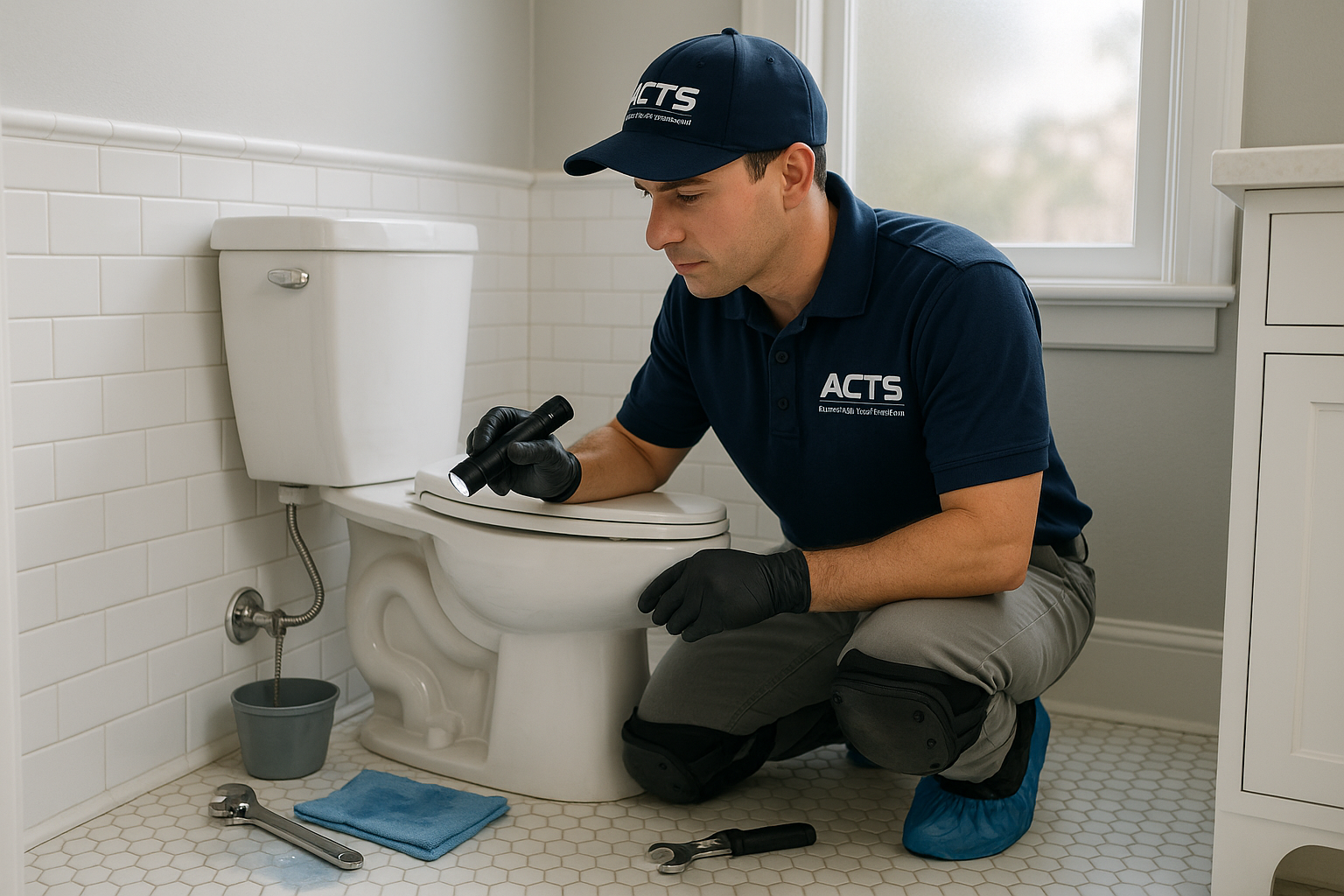
Water on the Floor Near Your Toilet? A Bay Area Home Maintenance Guide to Stop, Diagnose, and Fix It
Introduction
If you notice water on the floor near the wall behind your toilet, act quickly. First, stop the water if it’s actively leaking. Next, determine whether the water is clean (supply or tank leak) or potentially contaminated (seepage from the toilet base). Begin drying within 24–48 hours to prevent mold, then diagnose common sources such as the supply line, tank-to-bowl gasket, or the wax ring at the base. Bay Area homeowners should also consider seasonal condensation—“sweating” tanks can mimic a leak during foggy, humid spells near the coast. [1][3][4][7]
First: Make It Safe and Stop the Water
- Shut off the leak source:
- Turn the toilet’s angle stop (the small shutoff valve at the wall) clockwise until it stops.
- If water keeps flowing or the valve is stuck, close your house shutoff valve to stop water to the home. In Hillsborough (served by Cal Water’s Bear Gulch District), Cal Water advises customers to use the house valve—often located outside near a hose faucet. Contact your water utility if you can’t find it. [1]
- Keep people and pets away if contamination is possible:
- If water seeps out at the toilet’s base when you flush or has a foul odor or discoloration, treat it as potentially sewage-impacted. Use gloves and eye protection, and restrict access until cleanup is completed per local health guidance. [2]
- Start drying immediately:
- Dry wet areas as soon as you can. Aim to dry materials within 24–48 hours to minimize mold growth risk. [3]
Is It a Leak or Condensation? (A Common Bay Area Curveball)
Cool toilet tanks can “sweat” when warm, humid bathroom air hits the colder tank surface. In the Bay Area, coastal fog and marine layers in summer can raise indoor humidity and increase condensation, especially in homes from San Francisco down through Hillsborough. [7]
Quick condensation test:
1) Wipe the tank and bowl exterior completely dry.
2) Place dry tissue around the tank base and on the floor where you saw water.
3) Run the bath fan and avoid flushing for 15–30 minutes.
4) If moisture reappears evenly on the outside of the tank and drips to the floor, you’re likely seeing condensation—not a plumbing failure.
If sweating recurs, improve ventilation, use a temporary dehumidifier, and consider a tank insulating liner. This step is diagnostic and maintenance-focused; it’s not a code or permit issue. [7]
Common Leak Sources and How to Check Them
Supply line and angle stop
- What you might see: Water around the shutoff valve and braided supply connector, near the wall or along the floor.
- How to check:
- With water off, feel around the valve body, packing nut (small nut behind the handle), and both ends of the supply line for moisture.
- If seeping at the packing nut, a gentle quarter-turn snug may help. Replace any brittle, corroded, or kinked supply line.
Tank-to-bowl bolts and gasket
- What you might see: Drops forming under the tank and tracking down the back of the bowl, then pooling on the floor.
- How to check:
- Run a dry tissue along the underside of the tank and around the tank-to-bowl bolts. If wet, consider replacing the tank-to-bowl gasket and bolts. Turn water off first and drain the tank before disassembly.
Base of the toilet (wax ring/closet flange)
- What you might see: Water pooling around the base after flushes, sewer odors, and/or a toilet that rocks—classic symptoms of a failed wax ring or a flange set too low or in poor condition. [4]
- Why it matters:
- A bad wax ring allows contaminated water to leak out at floor level and can damage subfloors if not addressed. [4]
In-wall or floor piping (less common but serious)
- What you might see: Persistent dampness, staining, or swelling in wall or floor materials near the toilet even when the fixture isn’t used.
- Next step:
- If you suspect a concealed leak, stop water and call a licensed plumber. This often requires opening finishes to inspect and repair safely.
What’s Code-Required Versus Good Maintenance
- Mandatory (California Plumbing Code):
- Where a fixture contacts a wall or floor, the joint must be made watertight. That includes your toilet base and any areas where it meets finishes. This is a code requirement, not an optional best practice. [5]
- Good maintenance:
- Improving ventilation, checking for seasonal condensation, and proactive part replacement (e.g., aging supply lines) are recommended homeowner practices but not code mandates.
DIY or Call a Pro?
Reasonable DIY for many homeowners:
- Replacing a toilet supply line (with water off).
- Carefully snugging a slightly seeping angle stop packing nut (if accessible and in good condition).
- Replacing tank-to-bowl bolts and gasket (with water off and tank drained).
Hire a licensed plumber for:
- Wax ring replacement and flange issues—especially if the toilet rocks, the flange sits below the finished floor, or you see subfloor damage. Base leaks can involve contaminated water and structural concerns. [4]
- In-wall or in-floor leaks.
- Repeated tank seal failures or corroded shutoff valves that won’t close fully.
Permits and local signals:
- In Hillsborough, the Building Division indicates permits are generally required for plumbing systems/work. Confirm whether your specific repair—such as a wax ring, valve, or fixture replacement—needs a permit before you start. [6]
- Requirements vary by city. If you’re in San Francisco, check with the Department of Building Inspection to confirm current thresholds before fixture replacement or piping alterations.
Step-by-Step Bay Area Homeowner Checklist
Now
- Turn off the toilet’s angle stop. If the leak continues, close your house shutoff valve; in the Hillsborough area, Cal Water Bear Gulch advises using the house valve (often near a hose faucet) to stop flow. [1]
- If water could be sewage (seeping at the base, foul odor or discoloration), keep kids and pets away and use protective gear. Follow local health cleanup guidance. [2]
- Start drying immediately; aim to dry within 24–48 hours to deter mold. [3]
Diagnose
- Rule out condensation during foggy/humid weather:
- Wipe the tank dry, place dry tissue, ventilate, and wait 15–30 minutes to see if moisture uniformly returns on the tank surface. [7]
- Check common leak points:
- Angle stop and supply line connections.
- Tank-to-bowl bolts and center gasket.
- Base leaks after flushing suggest a failed wax ring/flange. [4]
Act
- DIY if comfortable: replace a supply line; snug a minor packing nut seep; replace tank-to-bowl bolts/gasket.
- Call a pro: wax ring/flange/subfloor repairs; in-wall leaks; stuck valves; repeated failures; any contamination risk. [4]
- Ask your local building division whether a plumbing permit is required (Hillsborough signals that plumbing permits are generally required). [6]
Aftercare
- Clean and disinfect hard surfaces per San Mateo County Health guidance; discard contaminated porous items as advised. [2]
- Keep the area ventilated and continue drying to stay within the EPA’s 24–48 hour mold-prevention window. [3]
- Monitor for recurrence after a few uses and after a day of normal bathroom humidity.
Bay Area Notes on Prevention
- During humid coastal spells, run the bath fan during and after showers to curb tank sweating. [7]
- Replace aging supply lines proactively and exercise shutoff valves periodically so they function when you need them.
- When reinstalling or replacing a toilet, remember the California Plumbing Code requires the joint where the toilet meets the floor to be watertight. If you have questions about acceptable sealing practices in your city, ask your local Authority Having Jurisdiction. [5]
Conclusion
Water on the floor near your toilet is fixable—but time matters. Shut off the water, decide if it’s clean or contaminated, dry quickly to avoid mold, and check the usual suspects: the supply line, tank-to-bowl seals, and the base wax ring. In our coastal climate, don’t forget to rule out condensation during foggy, humid periods. When in doubt—or if a wax ring, flange, or in-wall piping is involved—call a pro.
Need help now? ACTS serves homeowners from San Francisco through Hillsborough with plumbing, HVAC, electrical, and general contracting support. Contact us for an assessment or a quote, and we’ll help you protect your home and get your bathroom back to normal.
References
[1] California Water Service (Cal Water) – Bear Gulch District. "Bear Gulch District – Main and After-Hours Contact (includes “How do I turn off the water supply to my house?”)." California Water Service. https://www.calwater.com/district/bear-gulch/
[2] San Mateo County Health, Environmental Health Services. "Cleaning Up Indoor Sewage Spills (PDF)." San Mateo County Health. https://www.smchealth.org/sites/main/files/file-attachments/sewage_spill_cleanup.pdf
[3] U.S. Environmental Protection Agency (EPA). "A Brief Guide to Mold, Moisture, and Your Home." U.S. EPA. https://www.epa.gov/mold/brief-guide-mold-moisture-and-your-home
[4] Oatey Co. "When do I need to replace a wax ring?" Oatey. https://www.oatey.com/faqs-blog-videos-case-studies/faqs/when-do-i-need-replace-wax-ring
[5] Town of Los Gatos (quoting the California Plumbing Code, 2022). "2022 CALIFORNIA PLUMBING CODE (Municipal handout excerpt)." Town of Los Gatos. https://mccmeetingspublic.blob.core.usgovcloudapi.net/losgatos-meet-60fd932d0f6647f2ae4d35cbfad8efc8/ITEM-Attachment-003-b645c524455245aba05d959761dca358.pdf
[6] Town of Hillsborough, CA – Building Division. "Building Permits." Town of Hillsborough. https://www.hillsborough.net/140/Building-Permits
[7] National Weather Service, San Francisco/Monterey (NWS Bay Area). "Ask the Expert (Bay Area climate/fog Q&A)." NOAA/National Weather Service. https://www.weather.gov/mtr/ask_expert