
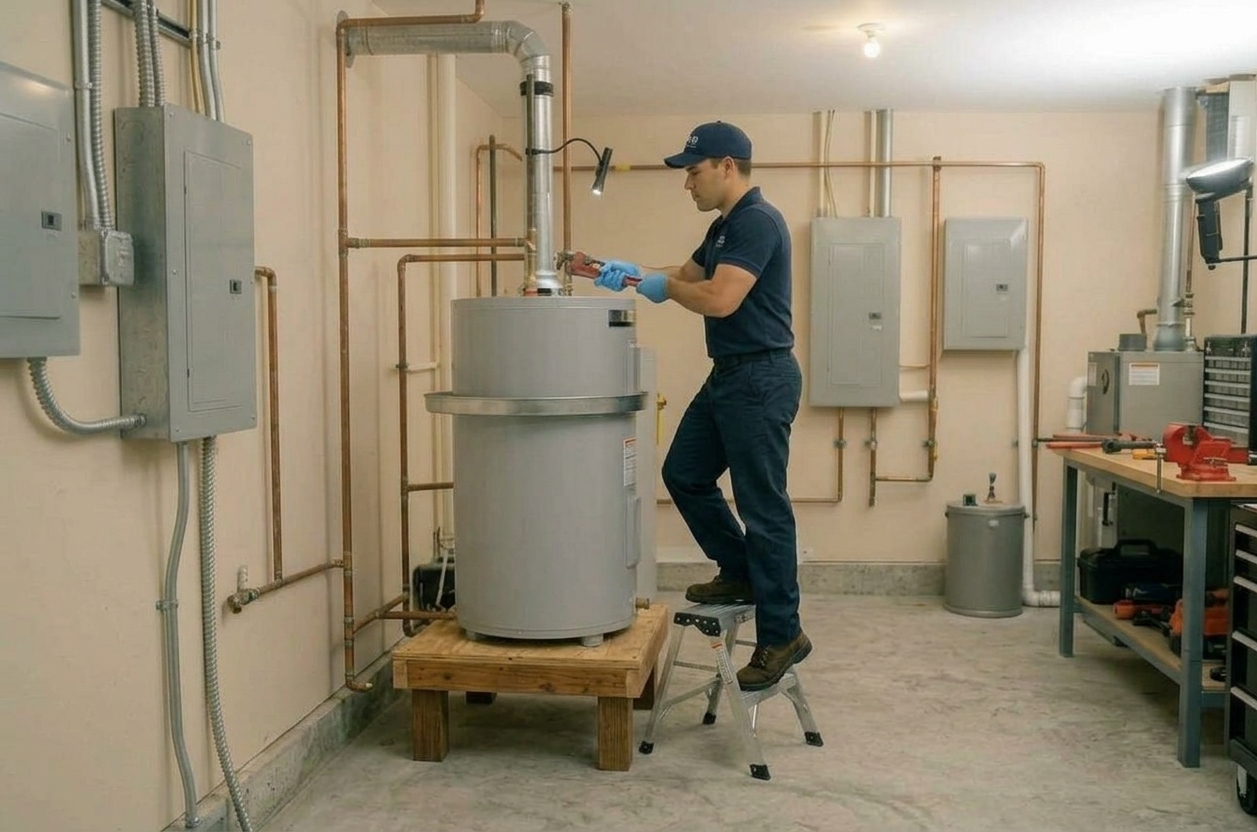
Is My Water Heater Broken? A Bay Area Homeowner’s Guide to Safe Checks, Codes, and When to Call a Pro
If your showers have gone cold or you’ve spotted a leak around your tank, your water heater might not be “broken” yet—but it does need attention. In many San Francisco and Peninsula homes, a few safe, step-by-step checks can separate a simple fix from a real repair. Below, we’ll walk through what to look for, what’s safe to try, and when to call a pro. We’ll also cover local permitting and earthquake-readiness requirements that affect every replacement in San Francisco and Hillsborough.
Important safety first
- If you smell gas, see scorch marks or soot, or your temperature and pressure (T&P) relief valve is discharging hot water continuously, stop and contact PG&E or a licensed plumber immediately. Keep flammables away from the heater, and don’t force a relight if you’re unsure how to do it safely [4][2].
What “broken” looks like: Common symptoms and causes
- No hot water at any tap: This could be a tripped breaker (electric), a gas supply or pilot/ignition issue (gas), or a failed control. Start with the safe checks below, then call a pro if needed [4].
- Not enough hot water: The temperature may be set too low, or sediment may be reducing the tank’s usable volume. Annual flushing is a first-line maintenance step recommended locally to improve taste, odor, and performance [5].
- Water leaks or active T&P discharge: Shut off water and fuel, and call a licensed plumber. T&P discharge lines must terminate at an approved location; continuous flow or improper termination requires correction and will be flagged at inspection [2].
- Installation issues in garages or unstrapped tanks: Lack of seismic bracing or incorrect elevation of ignition sources in garages are common correction items and safety concerns here in earthquake country [2][3].
Quick, safe checks before you call a pro
These are low-risk home maintenance steps most homeowners can do.
1) Confirm your fuel type and power
- Electric heaters:
- Check the dedicated breaker at your main panel. Reset a tripped breaker once. If it trips again, call a professional.
- If the heater is on a GFCI or AFCI circuit, verify it hasn’t tripped.
- Gas heaters (PG&E service area):
- Make sure the gas shutoff valve to the appliance is open.
- Verify whether the pilot is lit or if the electronic ignition is active. If you cannot relight safely or are unsure, contact PG&E or a qualified technician rather than attempting it yourself. Keep combustibles away from the unit [4].
2) Check the temperature setting
- Aim for about 120°F (“warm” or “normal” on many dials). Higher settings increase scald risk and energy use without solving most hot water complaints [5].
3) Look for visible safety/code concerns
- Earthquake bracing: California law requires residential water heaters to be braced, anchored, or strapped to resist earthquake motion. If your tank isn’t properly secured, schedule bracing right away—this is a legal requirement and a safety must [3].
- Garage installations: Where applicable, the ignition source must typically be elevated (often 18 inches) to reduce the chance of igniting vapors—a common inspection item on the Peninsula [2].
- T&P relief valve: Confirm the discharge pipe terminates at an approved location. If it’s discharging continuously, shut the system down and call a pro [2].
4) Note any changes in water quality
- If hot water has an off-odor or taste, sediment could be building up. Hillsborough specifically advises homeowners to flush tanks annually; even with high-quality SFPUC-supplied water, sediment and odors can still occur [5].
Bay Area codes and permits: What homeowners should know
- San Francisco: Replacement water heaters up to 100 gallons may be exempt from a separate building permit if no new flue is installed, but a plumbing permit is still required. Plan for a plumbing permit and final inspection even during a like-for-like swap [1].
- Hillsborough: Water heaters are treated as permitted residential work; apply through the Town’s permit portal and schedule an inspection [6].
- Inspection expectations (typical on the Peninsula): You should expect checks for seismic bracing, proper T&P discharge termination, required ignition-source elevation in garages, insulation of the first 5 feet of hot and cold piping, and a bonding jumper across hot and cold piping. These items are representative of what field inspectors look for in our area [2].
Earthquake readiness isn’t optional
Your water heater is a heavy tank of heated water connected to gas or high-voltage circuits—exactly the kind of appliance that can cause damage in a quake. California Health & Safety Code §19211 requires all new, replacement, and existing residential water heaters to be braced, anchored, or strapped at least to the standards of the California Plumbing Code (local amendments may apply) [3]. Expect inspectors to verify bracing during permits and, often, during real estate transactions as well.
Maintenance moves that prevent “broken” symptoms
A little preventive home maintenance goes a long way toward avoiding cold showers and early replacements.
- Set and forget 120°F: Keep the temperature around 120°F for safety and efficiency. This is the Town of Hillsborough’s guidance and aligns with widely adopted scald-prevention practices [5].
- Flush annually: Hillsborough’s water quality page advises homeowners to flush the water heater once a year to remove sediment that can cause odors and off tastes. If you’re not comfortable doing this, ask a licensed plumber to service the tank and check the anode rod while they’re there [5].
- Keep combustibles away: Store paints, solvents, and cardboard away from gas appliances and their vents. This is core PG&E gas-safety guidance for homes on the Peninsula [4].
Items that vary—confirm during your permit or service visit
- Expansion tank: Whether you need one depends on whether your plumbing is a “closed” system (for example, a pressure-reducing valve or check valve on the service line). Requirements can vary by jurisdiction and inspector; confirm during permitting or a site visit [2].
- T&P discharge termination: County guidance calls for discharge to an approved exterior location. Some cities accept alternatives if they meet code—verify with your local Authority Having Jurisdiction (AHJ) [2].
- Water hardness: Many Peninsula homes receive SFPUC water via local providers like the Town of Hillsborough, but hardness levels vary over time and by blend. For precise figures, check your current Consumer Confidence Report (CCR) for your service address; Hillsborough links to current CCRs on its water-quality page [5].
When to repair vs. replace
Every brand, model, and installation is different, but as a rule of thumb:
- Repair may be realistic for issues like tripped breakers, thermostat settings, or minor control faults.
- Replacement is the safer choice when the tank is leaking, when repairs approach the cost of a new unit, or when the installation can’t be brought to code without substantial work (for example, unbraced tanks with multiple other deficiencies). Remember: replacements require permits and inspections locally, and inspectors will check bracing, discharge, elevation, insulation, and bonding details [1][2][6].
Prepare for an ACTS service call
To streamline diagnosis and permit compliance, have this handy:
- Brand, model, and serial number
- Fuel type (gas or electric), tank size, and approximate age
- Symptoms: no/low hot water, noises, leaks, discolored or smelly water, error codes
- Any previous permit or inspection records
Local permitting paths at a glance
- San Francisco: Expect to pull a plumbing permit for most replacements; some like-for-like swaps up to 100 gallons may not need a separate building permit if no new flue is installed [1].
- Hillsborough: Apply through the Town’s Building Permits portal; water heaters are expressly listed as permitted residential work [6].
- Unincorporated San Mateo County (a useful regional proxy for inspection focus): Online permits are available; typical inspection items include seismic strapping, T&P discharge to an approved location, 18-inch garage elevation for ignition sources, pipe insulation, and a bonding jumper across hot and cold piping [2].
Conclusion
Many “broken” water heater complaints trace back to a tripped breaker, a temperature dial set too low, or a maintenance item like sediment buildup. In the Bay Area, it’s equally important to think about safety: gas precautions, earthquake bracing, and proper T&P discharge are nonnegotiables. If your unit is leaking, your T&P valve is running continuously, or you smell gas, shut things down and call in help. And when it’s time to replace, plan for permits and an inspection so your installation is safe, efficient, and code-compliant.
Need help now? ACTS serves homeowners from San Francisco to Hillsborough with licensed plumbing, electrical, HVAC, and general contracting. Contact us for a safety check, maintenance service, or a code-compliant replacement plan tailored to your home.
References
[1] City and County of San Francisco, Department of Building Inspection. "SECTION 104.0 - PERMITS." City and County of San Francisco (codelibrary.amlegal.com). https://codelibrary.amlegal.com/codes/san_francisco/57e5f03c-2e0f-4ad9-8c7f-f6fef7e7e402/sf_building/0-0-0-85339
[2] County of San Mateo, Planning and Building Department. "Water Heater Permit." County of San Mateo. https://www.smcgov.org/planning/water-heater-permit
[3] California Legislature. "California Health and Safety Code § 19211 (Water Heater Strapping and Installation)." Justia. https://law.justia.com/codes/california/code-hsc/division-13/part-3/chapter-2/article-8/section-19211/
[4] Pacific Gas and Electric Company (PG&E). "Gas Safety." PG&E. https://www.pge.com/en/outages-and-safety/safety/gas-safety.html
[5] Town of Hillsborough, Public Works. "Water Quality." Town of Hillsborough. https://www.hillsborough.net/262/Water-Quality
[6] Town of Hillsborough, Building & Planning Department. "Building Permits." Town of Hillsborough. https://www.hillsborough.net/140/Building-Permits